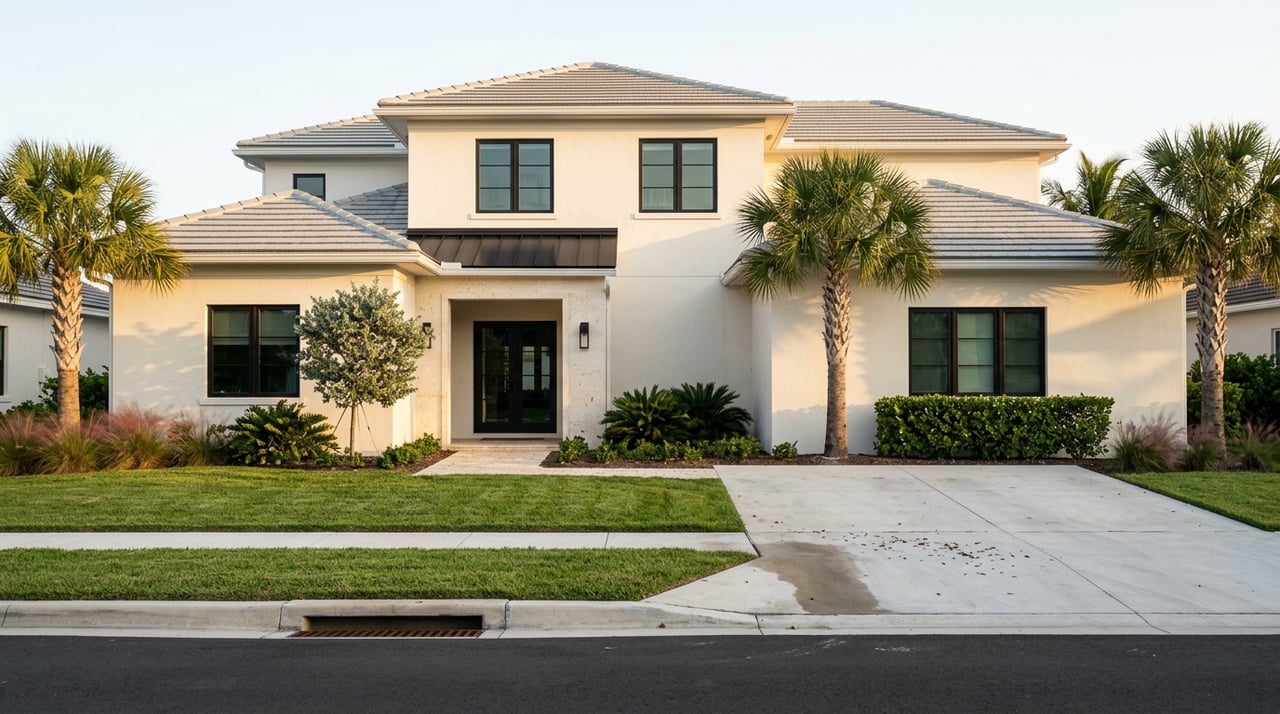
Parrish FL Real Estate Growth: What Buyers and Sellers Need to Know
June 18, 2026
June 18, 2026
Growth can create opportunity, but it can also make the market harder to read. If you are buying or selling near Parrish from the Spanish Point side of Manatee County, you may be wondering whether this area still behaves like an emerging market or if it is settling into something more stable. The short answer is that Parrish remains a major growth corridor, and understanding that can help you make a smarter move. Let’s dive in.
Parrish should not be viewed as a built-out, low-change submarket. Manatee County’s FY2026 budget estimates the county population at 466,727 in 2025, which is up 20% since 2019. The county has also created the Parrish Area Improvement District to focus redevelopment and infrastructure investment in the area around the Village of Parrish.
That matters because growth here is not just a headline. It is being planned, funded, and phased in through public projects and private development. For buyers and sellers, that means today’s market conditions are being shaped by what is already built and by what is still on the way.
A key reason Parrish feels different from a more established market is the size of its development pipeline. In May 2026, a county notice proposed increasing Parrish Lakes’ residential entitlements from 3,401 to 3,778 units, while also allowing a school use and extending buildout to 2036.
Another May 2026 county notice proposed a 1,067.76-acre mixed-use project near Moccasin Wallow Road and US 301 with 3,158 residential units plus medical and commercial uses. County development records also show continued North River Ranch phases, including townhome and single-family plats, along with a separate proposal for 440 single-family homes along CR 675.
Taken together, these projects show that Parrish is still adding meaningful housing supply. If you are shopping in the area, you are not just comparing one neighborhood to another. You are comparing resale homes, move-in-ready new homes, and homes that may still be months from completion.
One of the biggest stories behind Parrish real estate growth is infrastructure. Manatee County is expanding roads, utilities, parks, and public facilities to support the area’s continued buildout.
The Fort Hamer Bridge project is designed to add a parallel two-lane bridge with pedestrian and bicycle facilities and lighting. The goal is to create a continuous four-lane route from University Parkway to US 301 and reduce pressure on I-75.
The Moccasin Wallow Road widening project covers 6.5 miles between US 41 and US 301. Plans include an interim four-lane buildout, a future six-lane design, a roundabout at US 301, and bike, sidewalk, and shared-use-path improvements.
Utility work is part of the story too. The Village of Parrish Sanitary Sewer Expansion is intended to add sewer capacity so commercial properties in the Parrish Commercial Village Overlay can connect to the county system.
For you as a buyer or seller, these projects matter because road access and utility capacity often shape convenience, future appeal, and how finished an area feels over time. In a growth corridor, those details can influence value just as much as the home itself.
Housing growth tends to change how people live day to day, so it helps to watch what is happening beyond rooftops and roads. Parrish Community Park on Fort Hamer Road now gives the area a county park with an amphitheater, splash pad, playground, and pavilion.
Manatee County also says the Gateway Greenway Trail is moving into construction as part of a broader corridor that will connect Palmetto and Parrish. These additions reflect a market that is becoming more complete over time, even if some areas still feel mid-buildout today.
School capacity is another piece buyers often watch closely in fast-growing areas. Rye Ranch Elementary is scheduled to open in August 2026 and is designed for about 960 PK-5 students.
The district’s 2026-27 construction list also includes a new North County Middle School designed for 1,268 students and a 16-classroom addition at Parrish Community High. Parrish Community High had close to 2,400 students as of August 2025.
These projects show that public facilities are expanding alongside housing growth. They also reinforce an important reality of Parrish: demand is not hypothetical. The county and school district are actively responding to it.
If you are buying in or around Parrish, expect more choice than you would see in a fully built-out area. That choice is segmented, though, and each option comes with tradeoffs.
A resale home may offer immediate occupancy, a more established setting, or a location near roads and amenities that are already complete. A new-construction home may offer a later move-in date, newer finishes, and builder incentives that can improve the monthly cost.
Builder incentives matter more than many buyers expect. Builders commonly offer mortgage rate buydowns, closing-cost help, or upgrades. That means two homes with similar sticker prices may have very different real monthly costs.
In Parrish, list price alone does not tell the whole story. You may need to compare:
If you plan to stay for several years, ask how the area may feel in three to five years rather than only how it feels on showing day. In a growth market, future phases, road access, and utility service can affect your long-term experience.
Your ideal choice may depend on how quickly you need to move. If you need certainty and quick occupancy, a resale home may fit better.
If your timeline is more flexible, a new home may open up advantages, especially when incentives reduce the monthly payment. Flexible timing can also mean less competition in some cases.
If you are selling in Parrish, your competition is broader than the resale listings around the corner. Buyers are often comparing your home with builder inventory, incentive packages, and quick-delivery new homes.
That changes the strategy. In this kind of market, pricing, condition, and presentation become especially important because buyers have more ways to compare value.
Resale homes often perform better when they offer something a new build may not match right away. That can include:
The goal is not to compete on age alone. It is to show why your home may offer better real-world value for the right buyer.
Days on market, or DOM, is the amount of time a listing has been actively for sale. In practical terms, a longer DOM often signals that buyers are questioning the price, the condition, or the overall value.
For sellers, that is an important signal to take seriously. If showings are light or buyer feedback keeps circling the same issues, the market may be telling you that an adjustment is needed.
In a growth corridor like Parrish, a slow listing is often a comparison problem rather than just a timing problem. Buyers are weighing your home against both resale options and new-construction opportunities.
Inventory is the pool of active homes for sale. When inventory is lower, buyers usually have fewer choices and face more competition. When inventory is higher, buyers often have more negotiating room and more time to compare options.
Because Parrish still has a meaningful new-home pipeline, inventory can feel layered here. You may see active resale listings, standing builder inventory, and homes that are sold from plans but not yet complete.
That makes the market more nuanced than a simple low-inventory or high-inventory label. Buyers should expect variety, and sellers should expect a more educated comparison process.
Over time, Parrish’s value story is likely to depend less on any single month of sales activity and more on which areas benefit most from access, completed infrastructure, and public investment. The ongoing road work, utility expansion, parks, and school projects all point to a market that is still taking shape.
That does not mean every property will perform the same way. It does mean that location within the growth path matters. Homes with stronger access and a more complete surrounding environment may eventually stand apart from homes in areas that remain under construction longer.
The clearest takeaway is that Parrish is moving toward a more complete residential market, but it is not finished growing. That creates both opportunity and competition.
If you are buying, expect choices across resale and new construction, and make decisions based on total value, timing, and future area buildout. If you are selling, expect buyers to compare your home closely with builder inventory, which makes pricing, presentation, and positioning especially important.
A fast-growing market can reward careful planning. If you want local guidance on how to read the numbers, compare your options, or position your home to compete, the Echo Belser Team is here to help.

We bring together a mix of integrity, imagination and an inexhaustible work ethic, striving to make each buying and selling experience the best possible.
Get In Touch With Our Team To Learn More

ECHO BELSER TEAM
11215 STATE ROAD 70 E UNIT 105 LAKEWOOD RANCH FL 34202