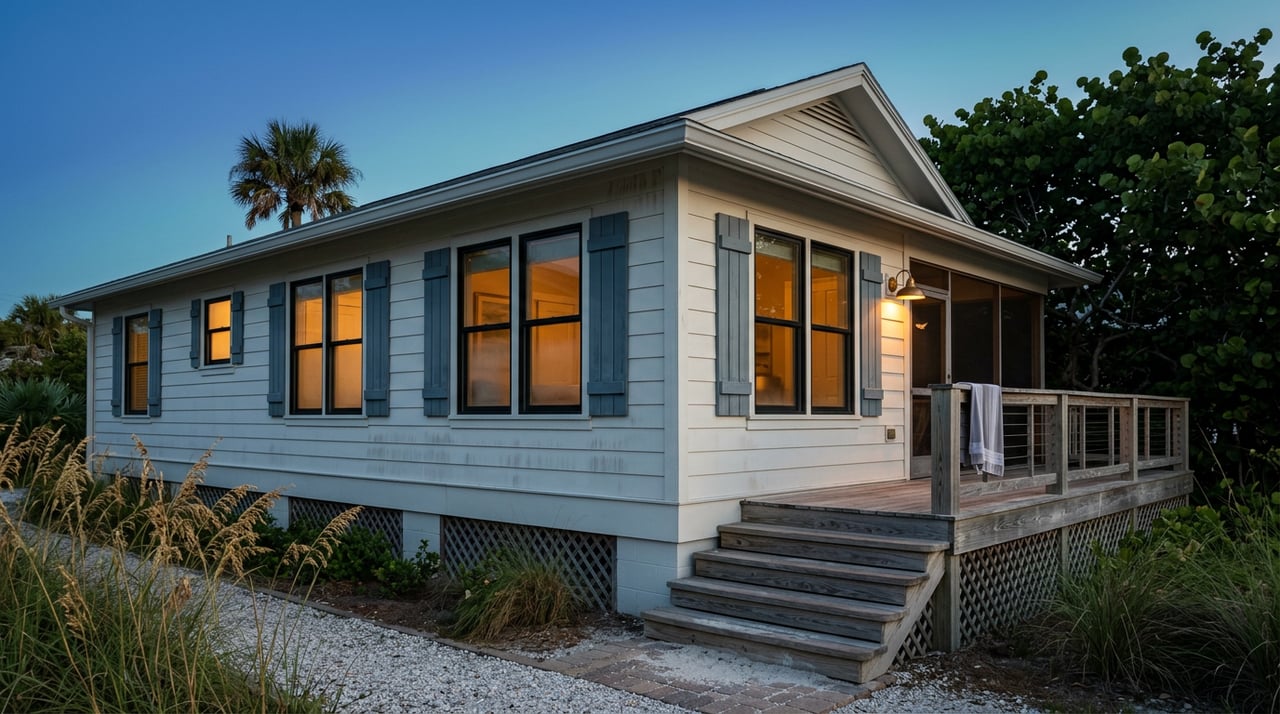
Why Anna Maria Island Is Rebuilding the Beach While the Turtles Are Still Nesting
August 13, 2026
August 13, 2026
The sky is still dark most mornings when Anna Maria Island Turtle Watch and Shorebird Monitoring volunteers head out with their ATVs, working their way along nearly seven miles of Gulf and bayside shoreline before the first beach chairs get set up for the day. They are cataloguing nests, checking on ones already marked, and feeding data into a conservation record that stretches back more than four decades. This August, they are also doing something the group rarely has to do: digging up and relocating nests that are already there, ahead of a beach renourishment project that starts on their watch, not after it.
That detail is the story most people miss when they hear "beach renourishment is coming to Anna Maria Island." It is not a fall or winter project scheduled around the season. It is starting this month, in the middle of one of the busiest nesting stretches the island has tracked in years, and the timing tells you more about the state of these dunes than any single headline number does.
Anna Maria Island Turtle Watch, known locally as AMITW, began patrols on April 15, two weeks ahead of the official May 1 start of Florida's nesting season. The numbers since then have moved fast.
| Reporting date (2026) | Total nests recorded |
|---|---|
| May 15 | 8 |
| May 29 | 80 |
| June 12 | 180 |
| June 19 | 246 |
| July 17 | 409 |
By July 17, AMITW had logged 409 nests, 517 false crawls, 36 hatched nests, and 1,726 hatchlings that made it to the water, with a hatch success rate above 70 percent. For context, the 2025 season finished as the third-highest on record for the island, with 544 total nests and nearly 31,000 hatchlings. By mid-July of this year, AMITW had already logged roughly three-quarters of last year's full-season nest count, with more than three months left before the season closes on October 31. Nobody at AMITW is calling this a record year yet, but the pace is not slowing down either.
Here is where the beach itself enters the story. According to reporting from AMI Sun, a smaller beach renourishment project is scheduled to begin this August at Coquina Beach and Cortez Beach, both in Bradenton Beach at the island's south end. A second, much larger renourishment project is planned for November, after nesting season ends.
Splitting the work that way is not the easy option. Ahead of the August project, AMITW volunteers have already relocated 39 nests off the stretch of sand where equipment will be working. Kristen Mazzarella, the nonprofit's executive director, has described the process as labor-intensive, requiring careful documentation and state permits for every nest that gets moved. Leaving nests in place and letting them hatch on undisturbed sand is always the preferred approach. Moving nearly 40 of them by hand, mid-season, is what happens when a project cannot wait.
That is the piece of this story worth sitting with. Anna Maria Island already organizes its calendar around sea turtles. The island canceled its own July 4 fireworks displays in recent years specifically to protect the sea turtles that nest on its beaches through the summer. When a beach project still gets scheduled for August, during active nesting, on a stretch of shoreline that already has documented nests on it, that is a sign the sand itself needed attention sooner rather than later.
The reason likely traces back to 2024. Hurricanes Debby, Helene, and Milton tore through the island's dune systems and the vegetation that normally sits on top of them. Those dunes do double duty: they buffer the beach from storm surge, and they block artificial light from homes, streets, and businesses from reaching the sand, which matters enormously to a hatchling instinct that has nothing to do with human infrastructure.
Newly hatched turtles crawl toward the brightest light on the horizon. On an undeveloped, dark beach, that is the reflection of the night sky on open water. On a beach with degraded dunes and a visible shoreline lit by porch lights and streetlights, hatchlings can crawl the wrong way entirely.
"Hatchlings instinctively crawl toward the brightest light, and that needs to be the night sky over the water, not a porch light."
That is Mazzarella, in AMITW's weekly report this July. The group documented at least 181 disorientation events last season, involving an estimated 4,000 to 10,000 hatchlings pulled off course by artificial light, a problem the storm-damaged dunes made significantly worse. This year, the numbers are smaller so far but still real: 16 disorientation events and at least 478 hatchlings affected as of mid-July, along with 37 dead hatchlings recovered. Rebuilding the dune line before another hurricane season peaks in September is not a project that benefits from waiting until winter, even if winter would be gentler on the turtles still nesting.
If you live near the Gulf side of the island, or you are the one walking the dog along the beach path most evenings, a few things are worth adjusting for the next several weeks:
For homeowners along the beachfront specifically, this is the exact conversation the AMITW has every summer, and it comes up again in our own notes for anyone who has spent time thinking about what it is actually like to own a home on Anna Maria Island. Lighting habits that feel minor from inside the house carry real weight on the sand outside it.
AMITW's free "Turtle Tracks and Shorebird Facts" talks run every Monday morning from 10 to 11 a.m. at Holmes Beach City Hall, 5801 Marina Drive, but only through August. If you have been meaning to go, there are only a few Mondays left before the series wraps for the year.
Further north, the historic Anna Maria City Pier, closed since hurricane damage in 2024, is on track for a late summer or early fall reopening, separate from the renourishment work happening down at Coquina and Cortez. Two different ends of the island, two different projects, both landing in the same handful of weeks.
None of this is dramatic on its own. A nest count, a construction schedule, a lecture series winding down. Put together, they describe an island that is doing repair work and wildlife protection at the same time, on the same sand, because 2024 left it no clean way to do one without the other.
The Echo Belser Team spends enough time on Anna Maria Island's streets and shoreline to notice when the rhythm of a season shifts. If you already call this island home and you are curious what that means for your property's value this year, Echo Belser would be glad to help. Request your free, instant home valuation whenever you are ready to talk.
We bring together a mix of integrity, imagination and an inexhaustible work ethic, striving to make each buying and selling experience the best possible.
Get In Touch With Our Team To Learn More

ECHO BELSER TEAM
11215 STATE ROAD 70 E UNIT 105 LAKEWOOD RANCH FL 34202